
Good products play with your senses.
Good design is not just about how something looks - it's about how it makes you feel.
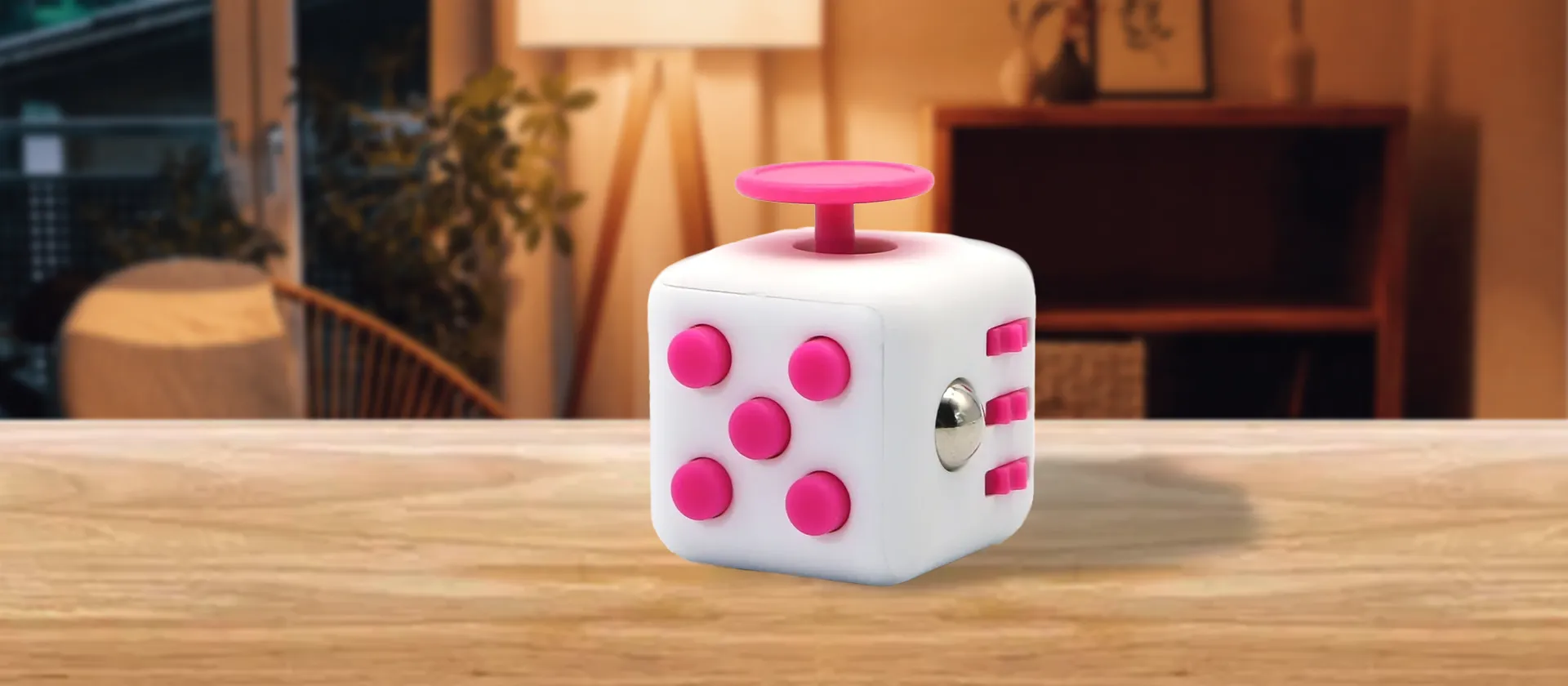
Composite: Sandy Fraser / SandPD · Source imagery: Evelyn Lily Interiors, Vecteezy, and Appash via Amazon.co.uk · edited for composition
You can have the best-looking room, with high-quality furnishings. But with cold, harsh, blinding LED bulbs, it will still look — and make you feel — like sh*t.
This isn’t just my opinion. In fact, studies support it.
A study conducted in 2026 by Wenxin Liu and others investigated how varying colour temperatures of indoor environments can impact both a person’s perceived comfort and their actual physiological response.
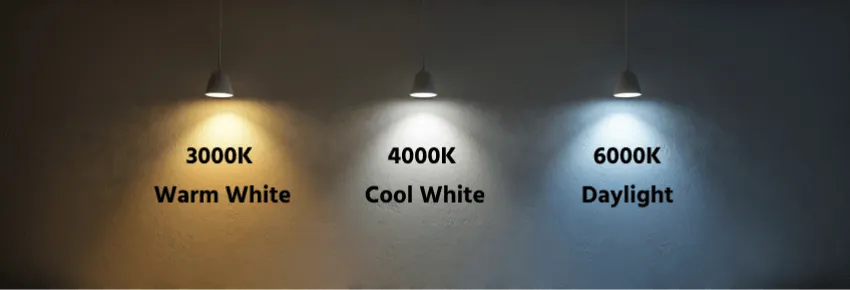
To absolutely no-one’s surprise, when the 36 participants were exposed to colder 6500K lighting compared with warm 2700K lighting, the researchers found a higher average heart rate within participants under the colder lighting. Indicating a greater level of - as researchers call, physiological activation. Or in other words, stress.
And when asked, participants also reported “greater perceived visual comfort” under the warm 2700K lighting. This isn’t just science, the people feel this change too.
A practical example of this is shown here. The room on the left feels cold, clinical and far less inviting, whereas the warm-lit room on the right feels far more comfortable and relaxing. It looks like somewhere you want to unwind in.
It is the same basic environment — but the lighting alone changes the mood entirely.
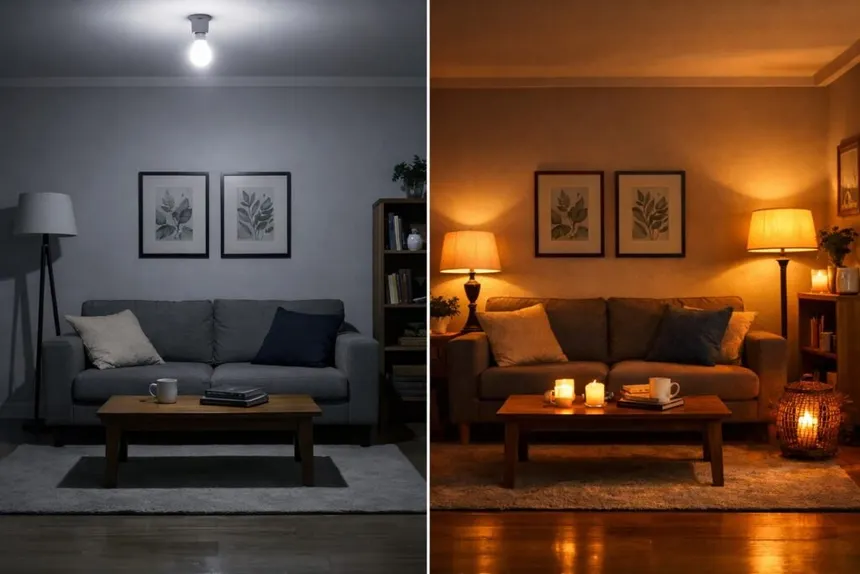
This helps explain why entering a warm, dimly lit, cosy room can make you instantly feel more at ease. The way a space is designed is not simply something we look at — it can influence how our body responds to it.
Which begs the question: how can I use this phenomenon to my advantage within Product Design?
When considering options for my product for my latest University Project, ‘Retail Therapy’, I am inclined to make the primary goal of my product making the user feel something.
There are many ways this could be done. Past lighting, there are many other senses to play with. Whether it be a product whose smell reminds you of home, whose texture reminds you of a moment in time, or whose sound transports you someplace else.
I mean, look to the past at one of the clearest mass-market examples of this: fidget toys. By mid-2017, everyone and their dog seemed to have either a fidget spinner or a fidget cube.
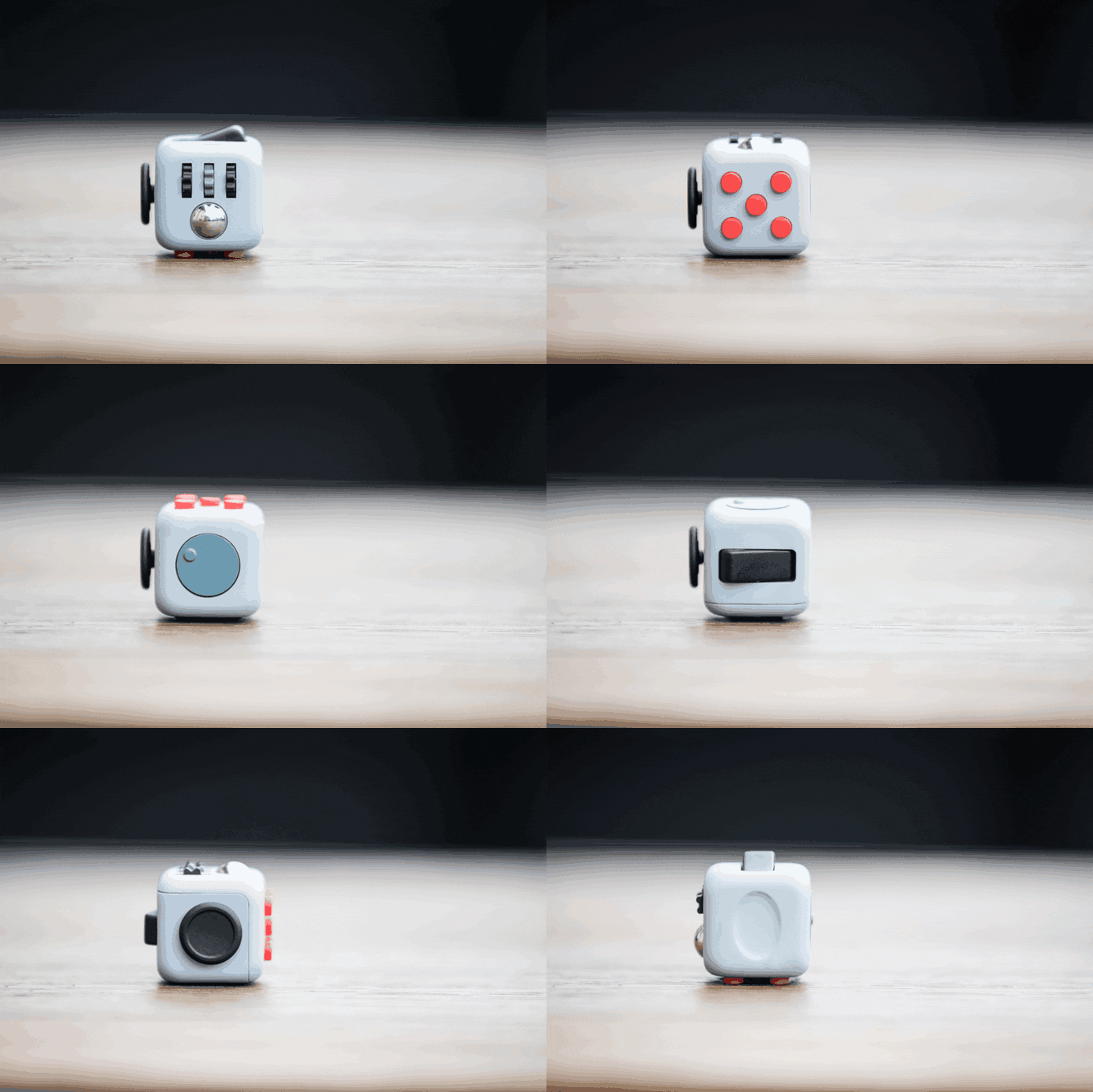
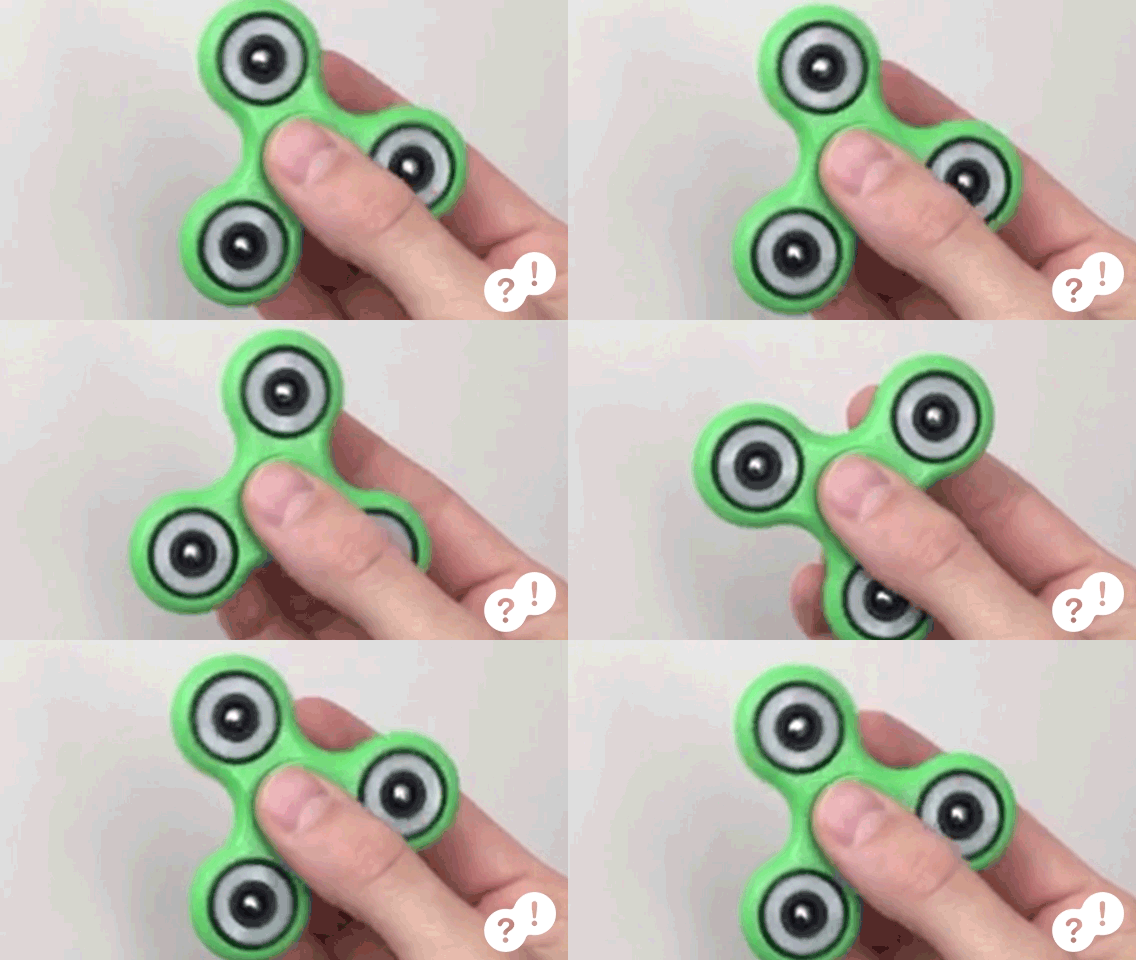
What interests me is that consumers weren’t primarily buying these toys because of their brand name — unlike people buying a device just because it has an ‘Apple’ on the back of it… The appeal was largely in how the product felt to use.
If you were bored in class, you could spin one for a minute. If you were feeling restless or anxious, you could play with the different surfaces of a fidget cube — clicking, rolling, rubbing or turning them.
Whether it be the smooth surface, the tactile texture, or simply the resistance of a clicky switch, the value came from the interaction itself.
Rather than me just explaining it, have a go.
To me, that’s a great example of a product whose value comes almost entirely from the sensory and emotional response it creates in the user.
That’s what I think another key pillar of Product Design is: designing not only for what a product does, or necessarily how it looks, but for how it makes someone feel.
I have inadvertentley realised that this blog is me paving the way towards my ideal end product for this project. I am forcing myself to think through what I actually like in design, and in doing so, revealing to myself what might actually make the most successful solution.